The Power of Hyper-Local Job Boards

You can find endless reports predicting the top jobs of 2026.
What those reports usually can’t tell you is something much more practical:
Which jobs are actually hiring in your community right now.
National workforce trends are useful in the abstract. But for job seekers deciding where to apply (and for chambers and economic development organizations trying to support real employers) relevance beats prediction every time.
That’s where hyper-local job boards have real power.
What Hyper-Local Job Boards Can Do (When They Work)
A strong community job board does more than list openings.
It becomes:
A real-time snapshot of local economic activity
A trusted place for residents to look first, not last
A low-friction way for employers to signal they’re hiring
A grounding counterweight to national data that often misses local nuance
We can’t tell you the most in-demand job in the U.S.
But we can tell you the most in-demand job in your community.
And that distinction matters.
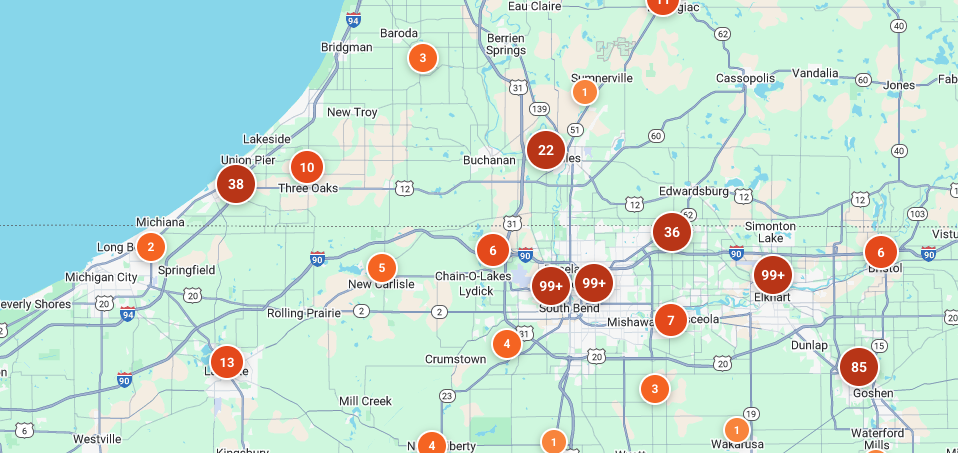
Why Local Insight Beats National Forecasts
Large platforms and workforce reports tend to answer questions like:
“What roles are growing nationally?”
“What skills will matter in five years?”
“Which industries are expanding overall?”
Those are valid questions — but they don’t help:
A resident looking for work within 20 miles
A small employer who needs applicants this month
A chamber trying to understand what’s happening on the ground, not in aggregate
Hyper-local job boards fill that gap by reflecting actual hiring behavior, not projections.
So Why Do Most Community Job Boards Fall Short?
If hyper-local boards are so valuable, why do so many quietly fade?
It’s rarely a lack of interest. It’s a mismatch between ambition and capacity.
Here’s what usually gets in the way.
1. Freshness Is Harder Than It Looks
Local boards live or die by trust. A handful of outdated listings is enough for job seekers to assume the board isn’t reliable — even if some postings are still valid.
Keeping listings fresh requires constant attention, and that’s where things break down.
2. Employers Don’t Want Another Platform
Most employers already post jobs in multiple places. Asking them to manually maintain yet another board — even a local one — often results in good intentions followed by inactivity.
3. Staff Time Becomes the Limiting Factor
Moderating postings, cleaning up expired roles, and following up with employers all take time. For small teams, job board maintenance competes with events, advocacy, and member services.
4. The Board Becomes Static Instead of Living
Without a system behind it, a job board becomes a snapshot instead of a signal. Over time, it stops reflecting what’s actually happening locally.

The Missed Opportunity
When community job boards fail, it’s not just a missed feature.
It’s a missed opportunity to:
Understand local hiring demand in real time
Support employers without adding friction
Provide residents with relevant, trustworthy information
Strengthen the supporting organization’s role as a community connector
The problem isn’t that hyper-local job boards don’t work.
It’s that most weren’t built with the reality of limited staff time and constantly changing data in mind.
The Real Question
The question for communities isn’t “Should we have a job board?”
It’s:
How do we maintain a living, local picture of hiring without burning out the people responsible for it?
Why We Built Rollie Jobs
That gap between the promise of hyper-local job boards and the reality of maintaining them is exactly why we created Rollie Jobs.
We weren’t trying to predict the future of work or rank the top jobs nationwide. We were trying to solve a much more practical problem: How do communities keep an accurate, trustworthy picture of local hiring without adding more work for already-stretched teams?
Rollie Jobs is built to support hyper-local job boards as living infrastructure, keeping them fresh, relevant, and grounded in what’s actually happening in a specific place.
Because the most useful workforce insight isn’t always national.
Often, it’s local.