What 30+ Open CNC Roles Reveal About Opportunity in Warsaw, Indiana
There is a conversation happening in manufacturing boardrooms, community colleges, and workforce development offices across the country. It goes something like this: we can’t find enough machinists.
This is not anecdote. A joint study by Deloitte and the Manufacturing Institute projects that American manufacturers will need 3.8 million net new workers between 2024 and 2033, and that roughly half of those jobs could go unfilled if the workforce pipeline doesn’t catch up. As of January 2025, there were still about 462,000 unfilled manufacturing jobs across the country. And within that broader shortage, the CNC machinist gap is getting worse: the shortage of qualified CNC operators today is roughly three times worse than it was a decade ago.
The Bureau of Labor Statistics projects about 34,200 machinist openings per year over the coming decade. Nearly all of them will come from retirements and workers leaving the field, not from growth. The pipeline isn’t empty. It just isn’t replenishing fast enough.
That conversation is easy to track at the national level. What’s harder to see is what it looks like in a specific place, at a specific moment, in the real labor market where real companies are posting real jobs right now.
Kosciusko County, Indiana is one of those places. And the data tells a story worth paying attention to.
A County With a Nickname
Most people outside of Indiana have never heard of Warsaw. It is a city of roughly 15,000 people in the north-central part of the state, about 40 miles from Fort Wayne and 45 miles from South Bend. By the numbers it is small. By one measure it is extraordinary.
Warsaw and Kosciusko County are home to the highest concentration of orthopedic device manufacturers in the world. Zimmer Biomet, DePuy Synthes, Biomet, Tecomet, Paragon Medical, Avalign Technologies — these companies and dozens more have built their operations here over decades. The orthopedic industry in Kosciusko County employs tens of thousands of people and generates billions in economic output annually. The county has earned its unofficial title: the Orthopedic Capital of the World.
Making orthopedic devices is not like making most manufactured goods. Hip replacements, knee implants, and surgical instruments have tolerances measured in microns. The parts that go inside a patient’s body have to be machined with a precision that borders on the extraordinary. And the tool at the center of that precision work is the CNC machine.
What Rollie’s Data Shows Right Now
Rollie tracks job postings in real time across the employers in Kosciusko County. When you look at that data today, one pattern stands out immediately.
Multiple orthopedic manufacturers are actively recruiting CNC machinists at the same time.
Tecomet, which specializes in contract manufacturing for the orthopedic and medical device industry, is posting CNC Machinist I openings across both its Warsaw and Claypool facilities. Some of those openings are on third shift. Some are structured around a four-day, ten-hour workweek. The company is posting multiple versions of the same role simultaneously, a clear signal that these positions have been hard to fill and remain open.
Paragon Medical, another Kosciusko County orthopedic manufacturer, is posting two CNC Machinist I openings in Pierceton at a starting range of $40,000 to $55,000. Avalign Technologies, which makes surgical instruments and implant components, is actively recruiting a Grind Machinist on third shift in Warsaw.
Three companies. Multiple open roles. All at the same time. All in the same county.
This is not a coincidence. It is a labor market signal, and it is the kind of signal that typically does not show up in national workforce data or state-level reports. It shows up in local job postings, if you are paying attention.
open roles | Source: Rollie Jobs — Kosciusko County, active listings, early 2026
number of open roles
CNC machinist and precision grind machinist roles only. Quality, maintenance, and manufacturing associate roles not shown.
The Gap Beneath the Gap
The skilled trades shortage is a well-documented problem. But within that shortage there is a more specific challenge that the orthopedic industry faces that most manufacturing sectors do not.
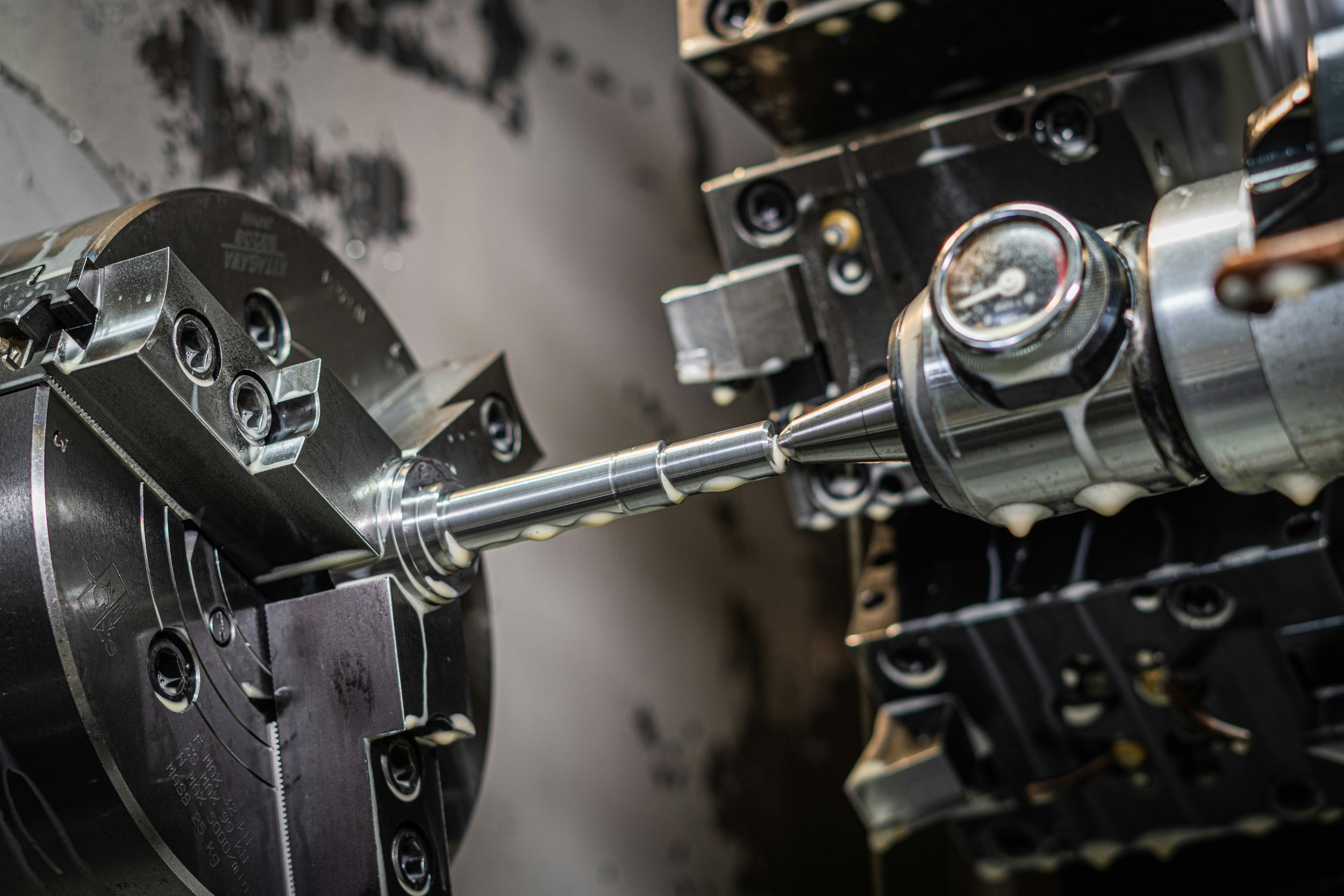
CNC machinists in Warsaw are not making furniture or auto parts. They are making components that surgeons implant into human bodies. The quality standards are governed by the FDA. The tolerance requirements are stricter than almost any other manufacturing context. A machinist working at Tecomet or Paragon Medical needs to understand GD&T (geometric dimensioning and tolerancing) at a level most general manufacturing jobs do not demand. Many of these roles require experience with specific machine types: Makino machining centers, grinding equipment, multi-axis platforms.
The national median wage for machinists was $56,150 in 2024, according to the Bureau of Labor Statistics. Entry-level CNC work in Warsaw is posting in a similar range. But entry-level CNC work for a company making orthopedic implants carries a learning curve and a quality burden that takes real time to develop. That gap, between what a program graduate can do and what an orthopedic manufacturer needs, is part of what keeps these roles open.
What This Means for the Region
For economic developers and workforce organizations in Kosciusko County, these open postings are not just numbers. They represent real production capacity sitting idle. Every unfilled machinist role is a shift that runs short, a part that takes longer to make, a contract that is harder to fulfill on time.
It is also an opportunity.
The pathway from a CNC training program to a role at an orthopedic manufacturer in Warsaw is one of the most direct skill-to-career pipelines available to someone entering the workforce in this region. These are not jobs that will move. The orthopedic industry’s roots in Kosciusko County run deep, and the infrastructure, the supplier networks, the specialized equipment, the institutional knowledge, does not relocate easily. The jobs are here. The challenge is building the pipeline to fill them.
Workforce gaps do not always announce themselves with big headlines. Sometimes they show up quietly, in three separate job postings from three separate companies, all open at the same time, all asking for the same skill set, all in the same county.
That is what Rollie sees in Kosciusko County today. The question is whether the region’s workforce development infrastructure can see it too, and move fast enough to respond.
Rollie tracks real-time job postings for local employers across Kosciusko County and dozens of regional markets. Data in this post reflects active listings as of early 2026.
Sources
Deloitte and the Manufacturing Institute. “The Manufacturing Skills Gap.” Manufacturing Institute, 2024. manufacturinginstitute.org
U.S. Bureau of Labor Statistics. “Machinists and Tool and Die Makers.” Occupational Outlook Handbook, 2024. bls.gov/ooh/production/machinists-and-tool-and-die-makers.htm
DEV Community. “The Manufacturing Skills Gap: Current State and Future Outlook.” April 2025. dev.to/jimmyshoe85/the-manufacturing-skills-gap-current-state-and-future-outlook-2hmg